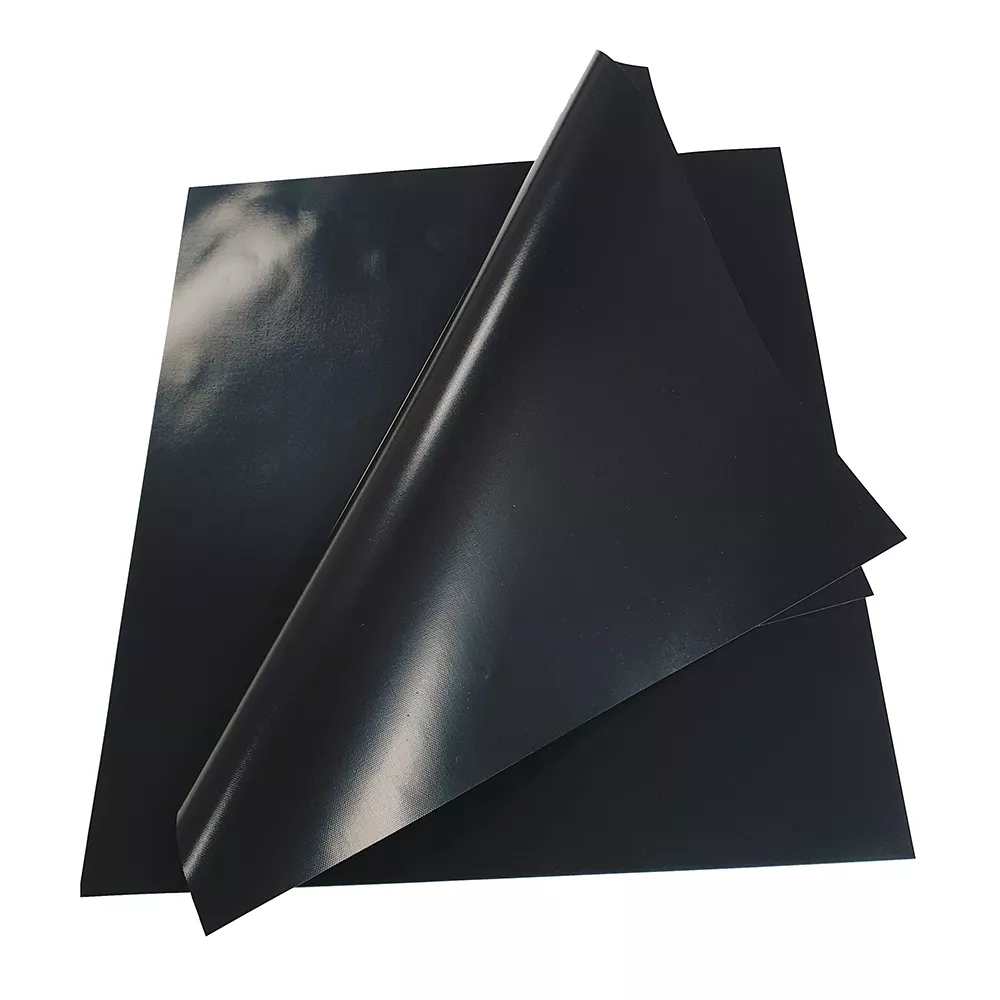
When choosing a reliable premium PTFE grill mat manufacturer, global retail category managers and private-label Amazon sellers often struggle with a common misconception: the assumption that a thicker protector sheet automatically equates to a longer lifespan. In mainstream kitchenware procurement, sourcing teams instinctively request high-thickness profiles (such as 0.19mm to 0.30mm), believing bulk mass guarantees rugged durability.
However, from the perspective of polymer physics and microscopic substrate mechanics, Ningbo Yinzhou Tianyu Synthetic Materials Co., Ltd. (Tianyu Synthetic) highlights that a micro-calibrated 0.14mm thin fiberglass base fabric saturated with a high coat weight of premium PTFE resin consistently delivers a significantly longer non-stick operational lifespan than poorly engineered thicker alternatives. Because the micro-thin fiberglass core allows for a much higher percentage of pure fluoropolymer resin penetration, the resulting ultra-smooth finish leaves absolutely no exposed glass bundles. This structural layout provides robust defense against localized grease carbonization, addressing the hidden operational defects of standard thick liners in high-end culinary and industrial baking applications.
Coating Weight Density vs. Base Fabric Volume: Microscopic Matrix Mechanics
When technical sourcing teams evaluate non-stick lifecycles with a premium PTFE grill mat manufacturer, materials engineers instinctively dissect the total composite gauge into two independent performance layers: the internal fiberglass structural core and the external pure fluoropolymer resin matrix.
- The Structural Flaws of Standard 0.19mm–0.30mm Heavy Sheets: Conventional thick liners on the mass retail market frequently utilize coarse, low-density fiberglass fabrics to artificially hit a heavy gauge while minimizing production overheads. These substrates receive only one or two superficial single-pass liquid PTFE sprays or shallow dips. Although micrometers register a heavy, substantial thickness, the surface profile remains volatile. Under severe thermal cyclic stress, the uneven glass knots expand differentially, puncturing through the brittle, ultra-thin polymer skin. Once these raw fiberglass micro-bundles fracture and become exposed to active cooking fields, hot cooking oils and carbonized barbecue sauces latch onto these microscopic anchors, causing localized charring, smoke off-gassing, and irreversible loss of non-stick surface integrity.
- The Microscopic Defense of the 0.14mm Super-Smooth Configuration: Conversely, the 0.14mm custom formula engineered by advanced industrial dipping lines—such as those operated at the automated facilities of Tianyu Synthetic—is built on the technical philosophy of a “micro-thin base with a heavy-duty defensive barrier.” It deploys an ultra-fine, low-denier, high-density fiberglass fabric as the engineering foundation. This tight canvas undergoes multiple precision passes through computerized vertical liquid towers for continuous saturation coating. Consequently, within the precise 0.14mm physical boundary, the fiberglass core volume is heavily compressed while the mass percentage (Coat Weight) of premium raw liquid PTFE resin is maximized. The resulting glassy, super-smooth matrix covers every fiber crest completely. Even under high-heat commercial grilling environments up to 260°C (500°F), this high pure-resin shield provides a sacrificial wearing layer of extreme density, ensuring that sticky marinades, burnt proteins, and residual grease can never permeate the underlying fabric mesh.
Mechanical Physics & Flexural Stress: Preventing Micro-Cracking and Delamination
Whether utilized as an outdoor grilling sheet or a heavy-duty oven liner, a premium PTFE matrix undergoes frequent mechanical flexing, twisting, folding, and high-pressure water impacts during routine cleaning cycles or dishwasher routines.
- Rigid Fatigue of Coarse Fiberglass Substrates: Thick glass fabrics possess inherently high geometric rigidity due to their oversized yarn bundles and heavy-denier weave profiles. When a thick liner is flexed or compressed, an immense internal stress differential forms between the outer tension skin and the inner compression layer. This structural imbalance frequently triggers localized internal shear forces, causing the outer fluoropolymer coating to develop microscopic micro-cracks or experience stress-whitening. Over extended use, this structural fatigue results in “delamination”—the physical separation of the non-stick skin from the underlying fiberglass fabric core. Once cooking fats and aggressive grease penetrate these microscopic structural ruptures, the cohesive bond is permanently destroyed.
- Superior Resilient Flexibility of 0.12mm–0.14mm Substrates: Conversely, ultra-fine, micro-calibrated 0.12mm to 0.14mm fiberglass substrates possess exceptional geometric flexibility. When subjected to repeated wringing, rolling, or conforming to irregular, non-standard cooking grates, the high-density micro-strands adjust dynamically to redistribute localized stress fields without fiber snapping. This flexible architecture ensures that the super-smooth protective skin maintains 100% density and complete hydrostatic resistance over hundreds of wash cycles. By preventing internal micro-abrasion, it permanently blocks hot grease and carbonized proteins from infiltrating the interior fiberglass fabric structure.
Sourcing Economics & Commercial ROI: Why Premium 0.14mm Configurations Yield Lower Long-Term Sourcing Costs
To put it transparently, because advanced multi-pass vertical liquid coating towers consume significantly more high-purity raw PTFE dispersion and demand strict mechanical engineering tolerances, the direct factory ex-works price and initial procurement cost of the 0.14mm super-smooth premium grade matrix are noticeably higher than standard marketplace commodities. However, for established B2B volume buyers, global importers, and high-tier brands focused on long-term brand equity and low return merchandise authorization (RMA) rates, this upfront price premium translates directly into massive commercial Return on Investment (ROI) across retail storefronts:
- Absolute Thermal Stability and Global Customs Compliance (260°C / 500°F): The optimized high pure-resin percentage delivers superior, highly uniform thermal conductivity across the cooking grid. This balanced thermal uniformity effectively prevents edge curling, wrinkling, or premature blistering caused by localized heat traps common in rough, coarse fiberglass sheets. Furthermore, because Tianyu Synthetic deploys an absolute 100% PFOA and PFOS-free premium raw fluoropolymer formula, these heavy-coated profiles eliminate hidden smoke off-gassing risks, effortlessly passing strict US FDA and European LFGB food-contact customs criteria at international ports of entry.
- Dramatically Multiplied Wash-Cycle Lifespan: While budget-friendly, loosely coated heavy fabrics often strip their non-stick coatings, develop coarse spots, and become highly carbonized after a mere 20 to 30 cleaning cycles, the 0.14mm super-smooth matrix features zero surface macro-pores. Sticky barbecue sauces, burnt sugary glazes, and accumulated char wipe away instantly with hot water or during standard high-temperature dishwasher configurations, successfully enduring hundreds of washing turnarounds without friction degradation.
- Escaping the Low-Margin Commodity Trap to Scale Brand Equity: Sourcing a premium 0.14mm configuration allows private-label Amazon sellers and boutique department store distributors to completely step out of the hyper-competitive price wars surrounding low-cost, off-the-shelf 27x27cm individual cut sheets. By clearly highlighting professional specifications—such as “Super Smooth High-Coat-Weight Professional Grade”—on your custom retail kitting boxes, you can comfortably capture higher retail prices (AOV), defend higher profit margins, and secure exceptional consumer word-of-mouth that drives organic organic repurchases.
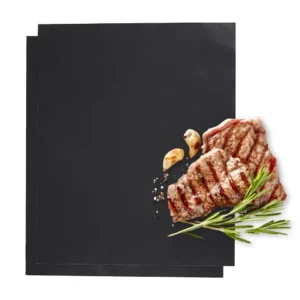
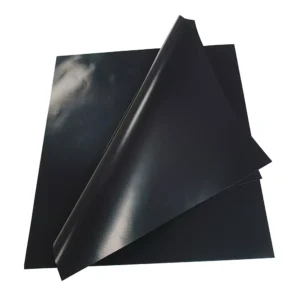
Strategic Sourcing Matrix: Matching the Right Gauge to Your Distribution Channels
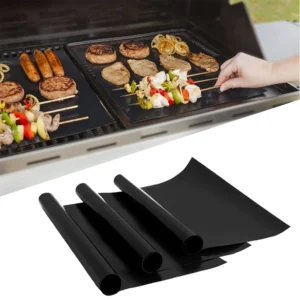
To optimize your procurement allocation and maximize container space efficiency, a professional buyer must match material specifications directly to the target market’s purchasing power. Sourcing is never about finding the single “best” sheet; it is about deploying the correct configuration for the corresponding retail shelf.
1. Who Choices the Standard 0.19mm – 0.20mm Regimes? (Budget-Driven & Volume Channels)
- Low-Price Supermarkets & Dollar Stores: Ideal for mass-volume discount retail networks where the retail price point is tightly capped, and consumers prioritize immediate low cost over multi-year longevity.
- Gift & Promotional Campaigns: Perfect for massive corporate give-away schemes, trade show marketing kitting, or bundled cross-promotions where the matrix serves as a complimentary high-perceived-value bonus item.
- High-Turnover Fast Catering: Suitable for budget-conscious commercial diners or seasonal pop-up food stalls that prioritize frequent, rapid replacement over long-term washing endurance.
2. Who Invests in the Premium 0.12mm – 0.14mm Regimes? (Value-Driven & Premium Brands)
- Premium Supermarkets & High-End Home Stores: Engineered for upscale retail shelves where consumers willingly pay a price premium for flawless aesthetic presentation, a super-smooth glassy finish, and certified FDA/LFGB strict compliance.
- Established Grilling & BBQ Specialty Brands: Sourced by market-leading private labels and specialized outdoor cooking equipment catalogers whose entire brand equity relies on exceptional durability, zero customer return rates (RMA), and flawless heavy-use reviews.
- Boutique Private Label E-Commerce storefronts: Perfect for boutique Amazon store managers looking to escape low-margin price wars by offering bundled kits labeled as “Professional-Grade Saturation Coating,” allowing them to successfully command a higher Average Order Value (AOV).