Introduction: The Invisible Trap in Bulk BBQ Liner Sourcing
For international sourcing managers, commercial kitchenware distributors, and private-label Amazon sellers, procuring barbecue liners seems straightforward. On paper, almost every manufacturing catalog promises “premium non-stick surface,” “FDA compliance,” and “heavy-duty heat resistance.”
However, once volume ocean containers arrive at overseas distribution hubs, a harsh reality often surfaces: premature fabric tearing, uneven heat distribution, and volatile toxic outgassing. In the B2B supply chain, low-cost trading companies frequently mask substandard substrates under glossy finishes. To safeguard your regional wholesale profit margins, you must understand how a verified factory actually tests PTFE grill mat quality before shipment.
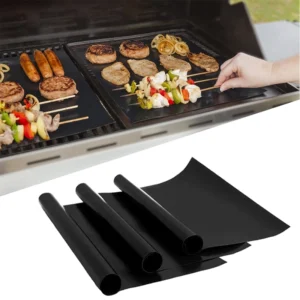
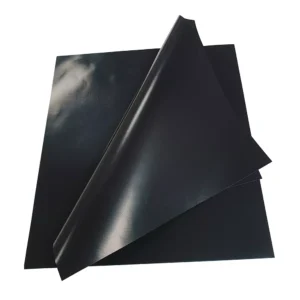
1. Verification Step 1: The Micro-Thickness and Fiberglass Density Calibration
The baseline durability of a non-stick liner is governed entirely by the precision of its inner matrix. Substandard vendors save manufacturing costs by utilizing a thin, loose fiberglass mesh substrate and over-spraying it with cheap liquid PTFE formulations. This creates a brittle mat that cracks under minimal friction.
At Tianyu Synthetic, our automated continuous calendering lines deploy high-precision digital micrometer gauges to ensure absolute uniformity. Whether your OEM contract specifies 0.2mm, 0.3mm, or 0.4mm, our thickness tolerances are locked within a microscopic ±0.01mm limit. Sourcing directly from an established factory ensures the fabric cross-section maintains optimal yarn density, translating to superior mechanical strength that prevents edge fraying during high-volume commercial catering usage.
2. Verification Step 2: High-Temperature Tensile and Delamination Testing
A true commercial-grade BBQ liner must withstand continuous thermal workflows rating up to 500°F (260°C). Trading firms cannot perform raw material stress tests, but an ISO9001-certified factory subjects every production batch to rigorous oven simulation and tensile strength pulling instruments.
This technical quality insurance protocol is the exact same standard we maintain across our newly expanded PTFE Toaster Bag and specialized industrial sublimation pressing matrix lines. By stretching the wax-infused and polymer-coated profiles under maximum heat fields, we guarantee zero risks of surface chemical peeling, bubbling, or delamination. This rigorous testing setup yields a verified service life that easily outlasts standard marketplace variations, cementing your brand’s reputation for elite quality.
3. Verification Step 3: PFOA-Free and Food-Contact Certified Compliance
Beyond physical toughness, global compliance clearances represent the ultimate checklist for major supermarket buyers entering Western Europe and North American channels. Substandard PTFE formulas often carry volatile manufacturing chemical residues that emit noxious odors when exposed to open flames.
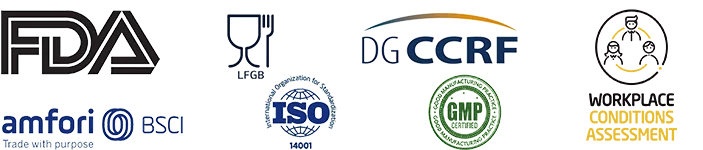
Professional procurement networks must demand independent, third-party laboratory certifications. Ensure your vendor provides comprehensive supply chain transparency, holding direct FDA and LFGB contact credentials with 100% PFOA-free safety report clearances. Partnering with a manufacturer that prioritizes chemical purity ensures your retail packaging can seamlessly slip into premium zero-waste and high-end culinary storefront lists without facing sudden legal liabilities.