Introduction: The Molecular and Structural Synthesis of Composites
Evaluating the operational durability of high-performance non-stick liners and flexible thermal shields requires analyzing material science far beneath the surface elastomer. Among modern vulcanized polymer technologies, silicone coated fiberglass has emerged as a groundbreaking milestone in composite material engineering. This advanced industrial fabric represents a synergistic union: it fuses the extreme multi-directional tensile strength of woven inorganic glass strands with the flexible, hydrophobic non-stick protection of organic liquid silicone.
When structural engineers analyze this matrix, partnering with an expert silicone coated fiberglass manufacturer ensures that the chemical compounding line achieves absolute structural integration. Unlike standard pure solid silicone sheets—which frequently suffer from rapid thermal expansion, volumetric stretching, and edge curling under heat—this fiber-reinforced composite maintains permanent dimensional integrity under intense operational stress.
1. Unyielding Core Matrix and Dimensional Flat-Lay Stability
The primary technical advantage of silicone coated fiberglass is its integrated inorganic reinforcement skeleton. Pure solid rubber compounds lack an internal support system; consequently, when exposed to mechanical pulling or high-pressure compression, they stretch out of shape like loose dough, causing permanent dimensional distortion.
Silicone coated fiberglass completely neutralizes this material fatigue. By embedding high-density, multi-filament fiberglass yarns inside the silicone bath, the fabric gains an unyielding structural backbone. This internal network forces the finished material to maintain an absolute flat-lay positioning. It easily endures continuous thermal workflows rating from -40°F up to 450°F (-40°C to 230°C) without suffering from mechanical sagging, edge fraying, or localized material elongation.
2. The Science of Thermal Conductivity and Multi-Directional Tear Resistance
Beyond dimensional stability, the thermal efficiency of this composite material is a crucial performance metric. Pure solid silicone is inherently a thermal insulator; to achieve meaningful physical toughness, it must be manufactured in thick profiles (often 1.5mm to 2.0mm). This cross-sectional mass severely delays heat transfer, leading to sluggish thermal conductivity and uneven cold spots.
In stark contrast, silicone coated fiberglass achieves vastly superior mechanical tensile strength at a mere fraction of the thickness—typically calibrated between 0.60mm and 0.85mm. The slim profile and low thermal mass of the microscopic woven glass layers permit near-instantaneous, uniform heat transmission directly across the sheet surface. Furthermore, while a localized knife scratch or pinhole puncture will cause a pure silicone pad to rapidly rip completely apart under continuous machine tension, the intersecting nodes of the internal glass grid isolate punctures immediately, blocking multi-directional tear propagation.
3. Premium Non-Porous Non-Stick Release and Chemical Purity Parameters
The molecular engineering of the silicone elastomer dictates the composite material’s overall chemical inertness and safety credentials. Low-tier manufacturing operations frequently lower fabrication costs by deploying cheap peroxide chemical catalysts during the vulcanization process. This outdated curing method leaves volatile organic compounds (VOCs) and a sticky oil film embedded within the rubber matrix, emitting toxic outgassing and foul chemical odors when heated.
An advanced silicone coated fiberglass manufacturer resolves this liability by upgrading to 100% platinum-cured liquid silicone formulations. Platinum vulcanization utilizes an ultra-pure liquid catalyst that triggers a clean, cross-linked polymer fusion without generating any chemical by-products. This high-precision setup yields a micro-smooth, non-porous hydrophobic coating shield that delivers absolute, effortless non-stick release. Viscous sugars, raw glues, heated polymers, and intense industrial resins slip away cleanly without permanent marking, ensuring full compliance with European LFGB and North American FDA food-safety reports.
Conclusion: Tailored Manufacturing Capabilities and Global Enterprise Services
As a premier silicone coated fiberglass manufacturer, Tianyu Synthetic utilizes over 12 years of coating expertise to deliver high-precision industrial and culinary solutions, ensuring food-grade structural uniformity across our silicone coated fiberglass product portfolio.
We offer comprehensive customization, packaging, and logistics services including dimensional calibrations, private-label branding, retail-ready preparation, and freight consolidation.
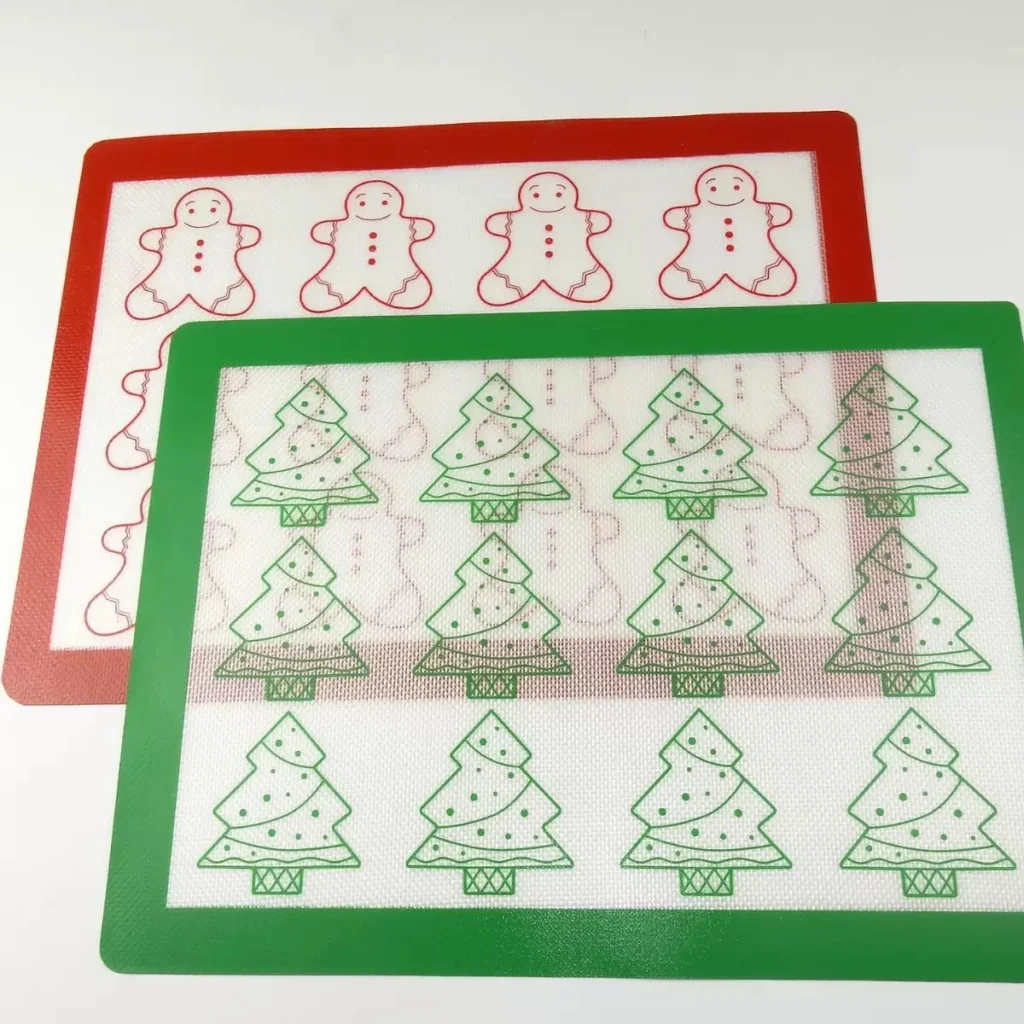
For high-precision industrial and culinary matrix solutions, feel free to explore our Silicone Baking Mat Wholesale Collection.