
Introduction
If you are sourcing PTFE grill mats for the European market, LFGB certification is not optional — it is the legal standard.
While FDA compliance is important for the U.S. market, PTFE grill mat LFGB certification is what European retailers, importers, and regulators look for. Without it, your products cannot be sold in Germany or many other European countries.
This guide covers the essential certifications for PTFE grill mats sold in Europe: LFGB, FDA, and BSCI — and what B2B buyers need to verify with their suppliers.
Why LFGB Certification Matters for European Buyers
LFGB (Lebensmittel- und Futtermittelgesetzbuch) is the German Food and Feed Code. It is widely recognized as one of the strictest food safety standards in the world.
For European buyers, LFGB certification signals that a product has passed rigorous third-party testing and is safe for food contact.
What LFGB Testing Includes
Unlike FDA compliance, which relies on manufacturer self-certification, LFGB requires independent lab testing covering:
| Test Category | What It Detects |
|---|---|
| Overall migration | Total substances transferring from the material to food |
| Specific migration | Individual chemicals (heavy metals, monomers) exceeding safe limits |
| Sensory evaluation | Does the material affect the taste or smell of food? |
| Heavy metals | Lead, cadmium, chromium, and other harmful elements |
“For more detailed information about LFGB testing methods, refer to the BfR LFGB data collections.”
What LFGB Certification Means for Your Business
- Legal market access: Required for Germany and widely accepted across the EU
- Buyer trust: LFGB is a recognized mark of premium quality and safety
- Retailer requirement: Major European supermarket chains require LFGB from their suppliers
FDA Compliance: For U.S. Market Access
While LFGB is the priority for Europe, FDA compliance remains relevant for B2B buyers serving the U.S. market.
PTFE is listed in the FDA regulations for food contact substances under 21 CFR 177.1550 — “Perfluorocarbon resins.”
PTFE grill mat FDA compliance ensures the material is legally approved for food contact in the U.S. market.
FDA vs LFGB: Key Differences
| Aspect | FDA | LFGB |
|---|---|---|
| Approval type | Material approval | Third-party product testing |
| Testing | Self-certification | Accredited lab testing |
| Scope | PTFE resin regulations | Complete product + sensory testing |
| Market | United States | Europe (Germany/EU) |
| Stringency | Moderate | One of the strictest globally |
BSCI: Social Compliance for Global Retail
BSCI (Business Social Compliance Initiative) audits factories for ethical manufacturing covering:
- Labor rights: No child labor, fair wages, working hours
- Health and safety: Workplace safety standards
- Environmental impact: Waste management and pollution controls
- Management systems: Documentation and continuous improvement
Why BSCI Matters for Your European Buyers
European retailers increasingly require BSCI compliance from their suppliers. It demonstrates:
- Ethical manufacturing — compliance with international labor standards
- Risk reduction — minimizes legal and reputational risk
- Brand protection — aligns with European consumer expectations
BSCI audits are valid for two years. Always verify the audit date when evaluating a supplier.
Comparison Table: LFGB vs FDA vs BSCI
| Aspect | LFGB | FDA | BSCI |
|---|---|---|---|
| Type | Third-party product testing | Material approval | Supply chain audit |
| Market | Europe (Germany/EU) | United States | Global |
| Scope | Complete product safety | PTFE resin compliance | Factory ethics |
| Testing | Accredited lab testing | Self-certification | On-site audit |
| Validity | Per batch/product | Ongoing | 2 years |
| Retailer requirement | Critical | Moderate | Increasing |
Summary Checklist for B2B Buyers
| Certification | What to Ask Your Supplier |
|---|---|
| LFGB | “Can you provide the current LFGB test report from an accredited lab?” |
| FDA | “Can you provide documentation that your PTFE complies with 21 CFR 177.1550?” |
| BSCI | “Do you have a current BSCI audit report (less than 2 years old)?” |
What Happens Without LFGB Certification?
Without LFGB certification, your product cannot legally be sold in Germany or most of the EU. The consequences can include:
- Shipment rejection: Customs may block the entry of non-compliant products
- Retailer refusal: Major retail chains will not accept uncertified products
- Regulatory fines: Potential penalties for selling non-compliant goods
For European buyers, PTFE grill mat LFGB certification is the baseline requirement, not an optional extra.

Conclusion
For PTFE grill mats sold in Europe, LFGB certification is the essential requirement. For the U.S. market, FDA compliance is the baseline. And for global retailers, BSCI is increasingly a must-have.
- PTFE grill mat LFGB certification is legally required for the German and wider EU market
- FDA compliance is relevant for U.S. market access
- BSCI compliance addresses the growing demand for ethical manufacturing
If you are a brand, retailer, wholesaler, or importer sourcing PTFE grill mats, verifying these certifications is the first and most important step. Non-compliant products cannot be sold in regulated markets and can damage both your reputation and your business.
We manufacture PTFE grill mats with LFGB certification, FDA compliance, and BSCI-compliant manufacturing practices. Our products are tested and certified for both European and U.S. markets, giving you confidence in safety, quality, and compliance.
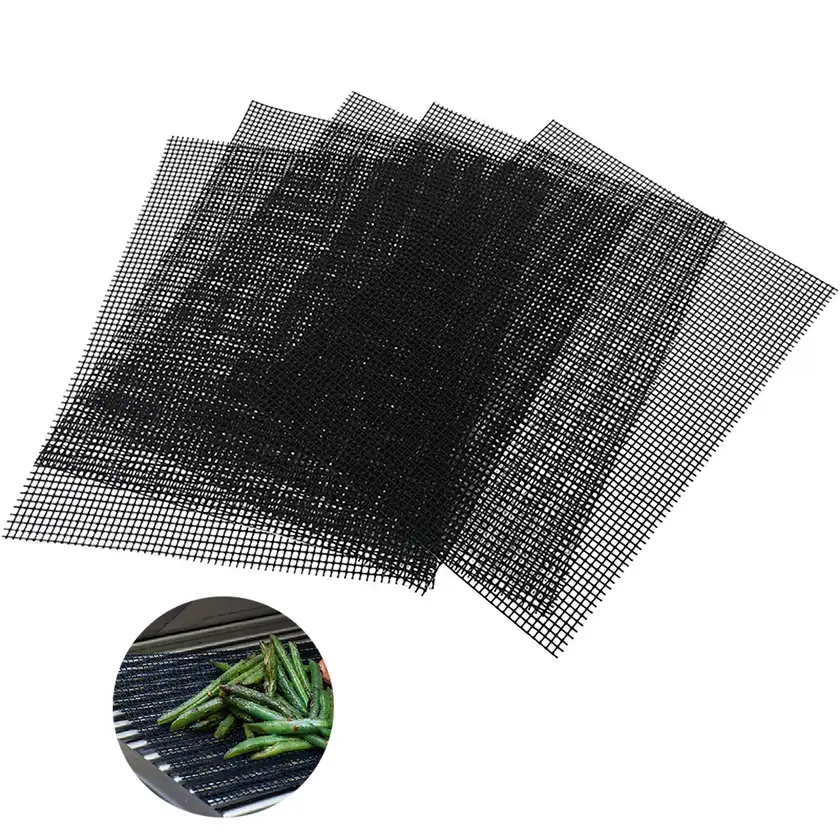
View our full certified PTFE Grill Mat Wholesale catalog, including our classic Standard 33x40cm Non-Stick PTFE BBQ Grill Mat and Standard Non-Stick PTFE BBQ Grill Mesh Mat.
Contact our team to discuss your sourcing requirements and request certification documentation.